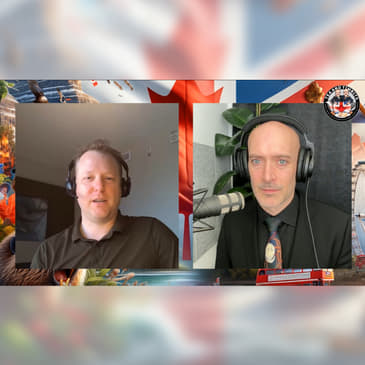
In this lively episode, Scott, dialing in from sunny San Juan, and Andy, battling the UK's less forgiving weather, delve into the art of juggling personal and professional branding. Andy shares an insightful sales story, spotlighting the importance of understanding your audience, which beautifully sets the stage for their main discussion. They explore the challenges and strategies of maintaining a cohesive personal brand while navigating corporate expectations, emphasizing the power of authenticity and storytelling over direct promotion. With engaging anecdotes and practical advice, they argue for a balanced approach that doesn't compromise personal identity for professional demands, making a compelling case for blending these worlds to enhance relatability and engagement.
[00:00:18] Hello everybody. I am one of your hosts, Scott, recording again in San Juan, Puerto Rico.
[00:00:25] Hello Scott, you're very lucky to have all this wonderful travel and sunshine.
[00:00:30] I'm coming to you from the United Kingdom where we are lacking both of those things.
[00:00:34] It comes around. I'm very happy to be here. Good to see you again, Andy. Welcome back everybody
[00:00:41] to the Tea and Timbits podcast, Global Perspectives on Business Development to help
[00:00:46] you prosper. Today we are going to get into a conversation about balancing personal and
[00:00:54] professional branding. It came out of the conversation that we had from our last episode
[00:01:00] in Andy's new venture for himself, but it has broader consideration. We'll get into that in a
[00:01:06] minute. Before we do, Andy, do you have a story for us?
[00:01:11] I certainly do. I'm very pleased to have been exposed to some experiences with sales copy.
[00:01:22] I know that's not something that we would normally talk about, and writing sales messages
[00:01:28] is something that I suppose is more of a marketing expectation. But I think perhaps it's
[00:01:36] important for salespeople to see and experience too. The story I want to share is one that I did
[00:01:43] experience before my transition, but I made a note of it and I wanted to maybe share it when
[00:01:48] I got the opportunity. I was with this sales team and this particular sales person. What he'd
[00:01:57] done is he had very cleverly, for every presentation that he was going to be making,
[00:02:04] he'd written a key overview thing that described the ideal customer or the target that he was working on.
[00:02:20] When he opened his presentation in the meeting, the customer felt, yes, you understand our problem,
[00:02:28] you understand our challenges, you understand what it is that we're dealing with.
[00:02:32] And I thought it was really clever that just keep it really simple and get it out there.
[00:02:38] So what he'd done is he basically said, customers of us who are experiencing this thing
[00:02:45] and suffering this because of it will benefit from our product because of this.
[00:02:52] Yes, there's definitely a way of making it better, but I just loved the way that he had thought
[00:02:57] about how I can get my message across. Just have it on in the background while
[00:03:01] I'm introducing myself, while I'm talking but just having it up on the screen so that they can feel,
[00:03:07] okay, actually these guys probably do understand what we're going through. Let's listen a bit more
[00:03:12] to what he has to say. I like that. Yeah, I mean, I always talk about establishing context at the
[00:03:18] beginning of every single meeting and I know I've said that here before too, but that sounds
[00:03:21] like a really effective way to start things off, set the tone, establish context and relevance.
[00:03:29] Love it. Thank you for sharing. So we're going to talk about balancing personal and professional
[00:03:35] of branding. Do you want to sort of comment first on how you think that that is a challenge
[00:03:43] to a lot of people and why we thought it would be a useful thing to talk about?
[00:03:48] For sure. I think one of the things that a lot of people struggle with and it is something
[00:03:54] that you and I have spoken about before is that we've both got a little bit of an infamy
[00:04:00] because we're working within our own businesses, but a lot of people who we work with are not.
[00:04:04] And so they will experience a situation where they're expected by their company to put out
[00:04:10] LinkedIn posts or Facebook posts or depending on the type of company that they have, they
[00:04:15] will be expected to represent the company in a certain way. And that's fine so long as
[00:04:20] you're working at that particular company, but what happens when you change jobs or you get fired
[00:04:26] or something because you've spoken to your entire audience about a certain thing in a certain way
[00:04:32] and then all of a sudden you're going to start talking about something else in a certain way.
[00:04:36] Well, yeah, that thing I was telling you about last week that was really great. Well, actually
[00:04:40] that's not so great anymore because this new thing that is actually a competitor to the
[00:04:44] thing I was telling you about is actually even potentially right. And it undermines your own
[00:04:51] personal brand because then you suddenly killing all of your own credibility.
[00:04:56] And so I think salespeople see that and they know that that's a danger when they go into this.
[00:05:01] And so they worry about should they be actually going into it like that? Should they be
[00:05:06] thinking about these things in this way and communicating to represent the company
[00:05:11] in such a distinct way? So how do they then introduce their personal brand into that
[00:05:17] and keep a consistent message going across regardless of which company they're working at?
[00:05:22] Right, right. And how can you also make sure that you're not that you're feeling genuine
[00:05:27] and that when you show up and you're representing a corporate brand and yeah,
[00:05:31] maybe you're even switching products or services within your role. But you still are
[00:05:39] you and people in your network who have gotten to know you don't want to sort of see this imposter
[00:05:46] on the screen or in social channels and whatnot. They want to still recognize the person they know
[00:05:54] that they personally establish a relationship with. A lot of us have other side hobbies,
[00:06:00] ventures be it fill-in-trop pursuits whatnot. And that's very much about who we are as
[00:06:08] individuals and people. Do you think there's a role to blend that or do you think what's your
[00:06:13] perspective on how you need to separate or allow those things to merge?
[00:06:18] No, I think it's essential. I think it's really important because people buy into the person
[00:06:23] and they build relationships with people. They don't buy, build into relationships with
[00:06:27] products or brands. Well, they do to some extent but those brands are then in some way
[00:06:32] integrated into their life and have a level of importance. But I think the key thing is when
[00:06:41] you are communicating your message that you're consistent, that you're clear. So if you're
[00:06:46] into fly fishing in your free time but you work for a steel manufacturing company,
[00:06:57] those two things are very, very different and trying to mix those two together is going to be
[00:07:04] very challenging. So I think a key for people is to go, okay, I'm going to dedicate my
[00:07:11] Instagram to fly fishing and I'm not going to communicate any work related items on there.
[00:07:16] I am just going to do fly fishing on my Instagram. However, on my LinkedIn,
[00:07:20] I will talk about the impact of this particular industry that I'm in but not necessarily talking
[00:07:27] about the product, talking about some of the challenges that you see in the industry
[00:07:32] but not talking about the solution. I think when people start to try and sell on social media,
[00:07:37] when people start to try and use social to promote a product or a company in such a way
[00:07:46] that it becomes so disconnected from reality, people are no longer interested in your profile
[00:07:51] and what you're saying anyway. So leave all that stuff to the company pages and the company marketing
[00:07:57] department and as you're presenting yourself as a salesperson, talk about the challenges in
[00:08:02] the industry, talk about how you're solving those challenges in the industry, talk about how
[00:08:06] people could solve those challenges in the industry, tell stories but don't promote the
[00:08:11] product, don't be salesy in your personal branding. Now I think that everybody probably who heard you
[00:08:18] say you do personal thing on Instagram and your professional thing on LinkedIn, I think that's
[00:08:24] something we would all expect but I don't think it needs to be entirely separate. I think that
[00:08:31] actually when you can weave them together, you'll get more traction. You'll suddenly
[00:08:41] have a better capacity to open up new conversations, identify with other people, get more engagement.
[00:08:48] I'm not saying do it all the time but some of the most engaging content that I post
[00:08:55] is got a personal element to it or I might put the whole photo catalog on, I mean I'll actually post
[00:09:05] very much on anything other than LinkedIn but if and when I did it would be a broader,
[00:09:12] very detailed social personal moment but if it trickles into LinkedIn there will be a
[00:09:21] professional anecdote or relatable story based on that and when that happens it's not trying to look
[00:09:29] for the story but sometimes it'll come forward because I'm like in a scenario, out on the water,
[00:09:35] out fishing, something like that with the kids that has a little bit of a relevant
[00:09:42] business tone to it as well and I feel it's worth sharing and those posts get more traction
[00:09:48] than anything I do from a purely corporate perspective. Absolutely, absolutely and that's
[00:09:54] the key. In that scenario if there was a way, the example that I gave, steel manufacturing
[00:10:00] industry, if they receive even such a thing and fly fishing, if you could go, customers in the
[00:10:06] steel manufacturing industry struggle with this and that reminds me of a situation in fly fishing
[00:10:15] that I deal with in this way. Those type of stories where you can link the two together
[00:10:21] is incredible and those things are really engaging and those are the most successful but
[00:10:24] most people can't do that, it's really difficult, it is challenging. I mean coming back to what I
[00:10:29] was saying earlier about the copywriting, I mean copywriting is a skill and there's a lot
[00:10:34] of copywriters out there who make a lot of money from coming up with these very clever
[00:10:38] connections but we can't all afford that and we can't all do that
[00:10:43] but if there is a way that you can figure out a way of linking those two in a relatively okay
[00:10:48] and genuine way then those things are typically as you say very engaging and people are much
[00:10:55] more interested in the personal side of things than they are just the professional side.
[00:10:59] Right, yeah so I guess what we're saying here and I think it's just a good reminder for
[00:11:05] everybody is you do not need to completely separate the personal brand from the professional brand.
[00:11:13] I think that there is a place and a channel that you can more naturally emphasize
[00:11:21] you know sharing personal information and sharing your corporate information but they don't need
[00:11:27] to be independent siloed personas and you're one person over here and you're one person
[00:11:33] over there and I think that unfortunately a lot of businesses don't realize that so I think that
[00:11:44] the individuals sort of would feel like they feel unnatural I think that's part of why it's
[00:11:51] difficult for a lot of people to show up and have a personal brand that they put forward
[00:11:57] because they feel like they're not it's not them and they're having to wear a suit that doesn't fit
[00:12:03] because they're trying to you know adopt the corporate brand so hopefully you're in a scenario where
[00:12:11] you have a little bit more autonomy to post authentic personal content for your professional
[00:12:20] endeavors and I think it's just so tragic when I hear that oh my business has a policy about what
[00:12:29] I can publish or they have to send it to them before I can you know publish something and I think
[00:12:39] you know perhaps there are some you know there are some regulated industries we have clients and
[00:12:44] financial services and insurance and things like that and if they get if they say the
[00:12:49] wrong thing the wrong way that you know liability issues and all that kind of stuff but I still
[00:12:56] believe there's got to be a way to just do it in a trustworthy professional way that that allows
[00:13:03] the individual freedom to just completely avoid any any of those kinds of topics but I think
[00:13:08] some companies think it's too risky but I really challenge you to find a way to
[00:13:13] I guess clearly to find those scenarios so that there can be more
[00:13:20] individual autonomy in those in those moments. I think as well I mean companies that have those
[00:13:26] sort of policies it must be very challenging for them to draw the line of what things on
[00:13:32] someone's personal social media that they're allowed to or not allowed to post. Yeah, yeah
[00:13:38] that's very difficult as I went to this place with my kids oh well that could be associated
[00:13:43] with a competitor's brand you can't post that. Oh hang on it's very strange I think.
[00:13:49] So anyway I guess you know that's a message directly directed specifically at those kind of
[00:13:54] communications leaders. I think if you're listening and you are sort of more the individual
[00:14:00] contributor if you're stuck in that situation you know your hands might be tied but
[00:14:06] but for everybody else it is I think absolutely critical to give yourself the flexibility to
[00:14:14] blend these two things together and so then I think you end up in a hesitation also Andy
[00:14:20] that comes back to where you started which is well wait a minute what if I show up and I'm
[00:14:26] you know representing one brand for a long time and then it shifts I better just sort of
[00:14:32] not do it at all and there's a big hesitation there so is it a problem in your opinion
[00:14:41] to switch brands or switch content in your account? I don't think so I don't think it's a
[00:14:50] problem at all I just think the key is to give it context yeah to explain at some point I mean
[00:14:56] and of course the problem is that the algorithms don't show it in a linear timeline fashion most
[00:15:01] of the time anyway but nonetheless so long as you've got something out there that you
[00:15:06] clearly communicate you know I was doing this now I'm doing this and that's because of this
[00:15:12] right that's fine that's the key and then you just start showing up as the new personal brand
[00:15:16] you start you know being consistent you start being clear there's no problem that's absolutely
[00:15:21] you know the right way of doing things but just just get on with it and I also think
[00:15:26] there's a scenario that applies to a lot of people who do have other
[00:15:34] sort of pursuits and they want to advocate for them or share them or whatnot and it's the same channel
[00:15:41] same audience but today I'm talking about you know what I do on the weekends and
[00:15:45] and you know perhaps it is a philanthropic endeavor something like that and this is my
[00:15:49] you know professional corporate contribution I think that shows more just how dynamic
[00:15:57] you are and adds you know just that much more
[00:16:02] relatability and approachability that we're all looking for when we do that so
[00:16:08] I get asked this question all the time so I thought it would be a good conversation
[00:16:12] and obviously my advice is to worry a lot less about it than people who ask the question
[00:16:20] very good thanks again for the conversation Andy appreciate your time thanks everybody
[00:16:27] if you want to get in touch you can go to tntimbits.com we'll see on the next episode
[00:16:35] thanks again Andy thanks how much go all right