How often should you be talking to your key accounts?
Often enough to be valuable. Not so often that they start screening your calls.
Today on Tea & Timbits, we're continuing our exploration of key account management, looking at the cadence and rhythm of successful customer relationships.
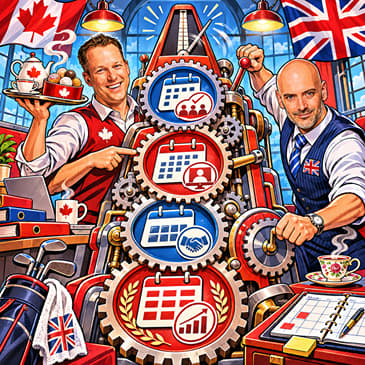
We discuss a four-layer approach:
🔹 Weekly – operational delivery
🔹 Monthly – commercial developments
🔹 Quarterly – strategic value
🔹 Annually or semi-annually – the wider partnership
But having a schedule is only part of the equation.
Who's involved? What's the purpose of each interaction? When should executives engage? When should you meet in person? And how should that rhythm evolve as the relationship matures?
Perhaps most importantly, are you developing that cadence WITH your customer?
Because key account management isn't just about playing golf, buying dinner and hoping your favourite contact never leaves the company.
It's about deliberately building a sustainable business relationship.
Speaking of golf, we've also established that our chances of a Tea & Timbits golf tournament are looking decidedly slim.
[00:00:18] Hello everybody, I am one of your hosts Scott coming to you from Canada. And I'm Andy coming to you from the United Kingdom. It's good to see you as always Andy. Thanks for joining us and tuning in again everybody. I know if you're here you've been coming back again and again and again and we appreciate it very much. This is the Tea and Timbits Podcast Global Perspectives on Business Development to help you prosper. And our theme at the moment is key account management. One that
[00:00:48] I really enjoy I think is a critical highly impactful pillar strategy for especially the B2B space. So I could probably turn the whole podcast into just this but suffice to say we're going to talk a little bit this week about sort of the rhythms and the cadence of that engagement.
[00:01:14] Um, we talked a bit sort of just generally introducing the strategy and identifying these key accounts in our last episode. Um, we're going to stay away from still like specific tactics and activities you do with those account, um, key accounts because that's going to be next week's episode. So today it's really around the, like I said, the rhythm and the cadence. So looking forward to getting into that with you, uh, Andy. Um, so we'll, we'll start with our story as usual, just kind of keep
[00:01:43] it contextual, keep it current. Um, what's on your mind at the moment before we roll into the episode, Andy? I had so many things I wanted to tell you and so many things I wanted to talk about today. And I had just choosing one little story was, uh, was challenging. Uh, but I'm going to, I'm going to go with, um, with one that's got me very excited. So, uh, coming up in a few weeks at the beginning of December, uh, I was given an opportunity to work with a, uh, a new, um,
[00:02:12] and aspiring entrepreneur who's, uh, started putting on, uh, new live music events, uh, in a, uh, city that's not had, you know, hard rock and metal music, uh, before. And, um, and I like working with, uh, young ambitious people, of course, and this first event is going to be a charity event. So that was very exciting. And, uh, but of course, you know, you want to make it a bit special and you
[00:02:41] want to put on a, on a, on a good show and you want to help this person to, um, to, to be successful as well. So I thought, okay, well, best thing I can do is go and meet the venue, meet the, meet the person and, uh, and find out, you know, what, what, what they currently have, what they've got set up, what they're used to doing and, and, and how it would work. And I get there and, um, and they have nothing, nothing at all. They have nothing that they need and they have no idea what they need and they
[00:03:09] have no idea how to get it. Um, so I was like, well, fortunately I do. And I can, I can now assist you with all of these things. But, uh, if you were going to go ahead and put a show on and book other bands to come in and play on that date, uh, it was going to be a big problem for you because you wouldn't have been able to put on that show. Um, so we've worked very closely together and now they're really, really happy. And we've actually managed to convince a band to come over from the U S for a
[00:03:37] one-off exclusive show at this charity event to just extra raise a bit of money. Uh, so it should be a really good event. Uh, it's, um, it's going on beginning of December in a town called Stowmarket in the UK. So if you happen to find yourself in the region and you like hard rock or heavy metal music, then come along. That sounds pretty good. That sounds pretty good. Interesting how some people just, um, I don't know, you kind of need the, uh, the, the visionaries to think like, yeah,
[00:04:03] I'm going to put on this, this event, but then, um, you need the, um, the, the, the tactical execution to go along with that. Right. Yeah. Um, very good. Well, um, let's, uh, let's get into it here. Um, talking about key accounts, um, and the, the cadence and rhythms that, um, make that useful. Um, what comes to mind, Andy, I'll, I'll throw it over to you first for any thoughts you have on,
[00:04:32] the right way to engage key accounts, the, the frequency with which to, to do it or not to do it, the, the, the sort of, um, pace at which you want to do it. Where are your thoughts go? Well, it depends. It depends really what you're sort of meaning by the cadence specifically to the key accounts. And so I'm going to answer your question in a kind of political way, but, uh,
[00:04:59] it's a, it's a way that will hopefully address, uh, what you're looking for. But in, in my perspective, very much, it's about having, um, see, I see key account management as a highly administrative role. And I think, I think a bit of the mistake that a lot of organizations make is that they, they see it as a, uh, as a normal sales role. Oh, I believe that this is a business management role.
[00:05:27] And, uh, therefore it requires a extremely good administration skills, extremely good, uh, business management skills. And, uh, and that means managing your calendar effectively, uh, uh, ensuring that you have a, uh, you know, a really, really strategic plan about everything, about how you're delivering the service that you're delivering to that customer, uh, how you're
[00:05:51] developing and maintaining and expanding the relationship with that customer and how you are also developing and expanding the work that you're doing together. And having regular calendared and, uh, agreed reviews, uh, with the customer as well to ensure that future, um, changes and, uh, resource decisions are made in a very effective way. And, uh, and if you don't have any of those
[00:06:19] recurring meetings, if you don't have those, uh, activities calendared and you don't have those things, uh, written down in an agreed mutual business plan with the key account, then you've got some work to do because, uh, in order to have a successful key account program and, uh, run it in an effective way, then, uh, you need to have those things in place. Uh, yes. Now, when you said
[00:06:44] it's, it's a highly administrative function, it, it, um, and I think even in the course of listening to you, I kind of came around to, to, um, hopefully identifying with what you were, what you meant. Um, but it, it, it, at first when you sort of said it that way, I thought, well, it's just, it's just, it's just kind of tactical. It's just kind of like sequential. It's, it's, um, I guess it
[00:07:12] is rhythmic, but, um, but it's not very contextualized. It's not very empathetic. It's just, um, it's just, uh, perfunctory. Um, and, and, and obviously I'm, I'm using words that are going to, um, direct the answer you, you, you give me, cause I'm not describing it in a very positive light. Um, but
[00:07:37] to contrast that to where I was going to go with it, um, to begin with is, is a little bit more, um, nuanced. I agree. You want to make sure that you are, um, you, you have a, an administrative, I guess, um, structure around it. And, um, and by that, I mean, um, that there is a, that there is a cadence to it. It's like, we'll do this every month. We do this every quarter. We do
[00:08:05] this every six months. We do these things weekly, daily, whatever it is. And so, um, and you have to make sure that you are, um, um, um, accountable to that, that, that those timeframes and those timelines and to the, and to the extent that you need to stay accountable and administrate that
[00:08:26] schedule, I suppose it is administrative. Um, as long as you're, um, doing some of those other activities that you, that you talked about, about, you know, making sure there's sort of a, uh, a mutually agreed, um, business plan and strategy in place between you and the, and the key account. Um, so have I sort of re-articulated that in a way that, that does resonate with what
[00:08:56] you were saying? Yes. And I, I think it's, um, what, what you're aiming for is, is maybe, be maybe something more of an element of what I was talking about, uh, which was very high level and very, um, all encompassing. I think if we're focused on, on the true cadence, then I think we really are drilling down into like the account reviews, perhaps like an account
[00:09:22] review, um, structure, uh, that's now, I mean, account reviews aren't then just looking at, are they living up to their numbers that are doing things like that. It's more about changing the customer and resourcing decisions within the organization and the, uh, and the customer as well. Um, so I guess when I was thinking about the topic for this episode,
[00:09:46] sort of cadence and rhythms and whatnot, um, I like to think of it in, in, in, um, um, I like to break it down into how often are we doing what activities? Ah, okay. Yeah. So that's the next layer of the account review part that I was referring to. Okay. Okay. Um, so it's like, it's like there, I think you want to be intentional about,
[00:10:16] uh, one, this is a key account to this is an aspiring key account. So they, they, they get some of this kind of attention if, and, and when it is available, but otherwise we're, we're going to do these patterns and, and then execute these tasks like critically. Um, and that would be who's responsible for what and how does that change daily interactions? What are
[00:10:44] they getting on a weekly basis? Who's talking to them in what way on a monthly basis? What's the quarterly check-in, um, and how does the shape of that change? What are they getting on an annual basis? Because I think that those kinds of rhythms and, and, and, and the, the cadence of, of that is, is important. It's not just about, well, there are key accounts. I'm going to talk to them every day.
[00:11:10] They might, they might get more annoyed than, than any, if you're, if you're pestering them too much. Um, otherwise I think, um, uh, you, you want to make sure that, uh, one, there's executive exposure on some set schedule. I think it depends on the, the account and whether or not you think, and I think we talked about this last time, like a, a key account does not necessarily,
[00:11:36] um, automatically is not, is not a label that automatically gets assigned to your largest customer. If they don't have the posture that, that, that shows that there's going to be growth, that they're going to be engaging with you, then they might just be a good client, not a key account, you know? And, and what kind of, uh, engagement do you, do you want to roll out on what kind of schedule and, and how do you want to resource that was a little bit of how I was breaking this down.
[00:12:03] Yeah. And I, I, I, as I say, I think that's, uh, that's absolutely essential. All of those things. Um, the way I've, uh, structured in the past is very similar to what you described there, actually. Um, it's more about you. So you're managing the, the, uh, the more immediate, uh, decisions. Um, what did we recall? What did we call it? I'm trying to remember now.
[00:12:30] I can't remember. We had, we had a special term for the, for this, uh, for this thing, but ultimately you're, you're managing those immediate delivery, uh, requirements on a weekly basis. And, uh, and, uh, and then any sort of larger commercial movements you're looking at on a monthly basis, then strategic value you're reviewing on a quarterly basis. And then the whole partnership thing you're looking at on an annual or semi-annual basis. And having those different
[00:12:57] layers, it means you've got this sort of four layered circular image. Imagine it that sort of always turning all the time. There's always some sort of activity and you can attribute the things that you're doing, even breaking it down to daily tasks, of course, um, is fits within those things. And because you have a, uh, a focus on those things and you have a strategy around it, you have
[00:13:25] documented that you've calendared it and calendar. That doesn't like, yeah, yeah, yeah. Um, but you've got it in your calendar and you're following up on these things and you, you're having that as part of your rhythm that you have for managing the, uh, the key account relationship. Um, it means that you don't cause the worst thing is that most businesses and, uh, it's, it's really sad, but most businesses you'll have a key account manager and that person is familiar with one or two people within the
[00:13:54] organization. They go out, play golf, have meals and, you know, use that. And then once a year, they'll sit down and have a commercial thing where they receive a tender, they'll respond to the tender. They may get it or they may not. If their main contacts leave the, the company leaves and, uh, they often lose the customer. And this is why understanding and being able to ensure that you
[00:14:22] have a full cadence and a plan and a strategy that expands that relationship, but also maintains that relationship throughout the year, not actually just, you know, going and playing golf and having meals and stuff, uh, you are actually building and maintaining the business relationship with a plan. Right. Yes. And I think that's, that's important on, on both sides here. One is we're not talking about just like how often are you going and taking them up for dinner or playing golf?
[00:14:52] By the way, do you play golf Andy? I do not. Okay. All right. All right. Um, well, it's not about that, right. It, it, it, it, it, but it can be that. And the other thing is you have to establish a structure that you know is appropriate for you to be effective at supporting the client's
[00:15:21] objectives. And you have to be able to, um, accommodate their preferences and their shifting, uh, behaviors. And it may not be something that is an overt, um, adjustment signal intention from the client. It may just sort of like, I I'm thinking very specifically of a scenario, um, that I had,
[00:15:48] uh, still have, but it started many, many years ago. And we were trying to work to, to be honest, we were trying to work through improving the, the, the working relationship. How, how can both teams on our side, on, on the client side, um, uh, just complete projects and work and manage requests and pay invoices on time and do all of that with, with, it's not like there was friction, but we just
[00:16:16] knew it should be a smoother process. Um, and, and each of, um, the, the companies had, you know, uh, good, good people interfacing with each other. Um, but I reached out to one of the executives on the other side and I said, how about we just open a line of communication outside of the project, outside of the daily routine. I just want to make sure that you and I, um, have aligned to
[00:16:46] each other. Let's put something in the calendar. And we started off every two weeks and it was a Friday half hour check-in. And for about 18 months, it was a really, really useful way to make sure that the projects themselves were advancing, uh, smoothly. It then became, um, a scenario where, um, you know, they, the, the client wasn't showing up every once in a while and that's okay because
[00:17:16] there wasn't really a, it wasn't really a priority to smooth anything over. Um, but, but then every so often we'd still get on the call and it might be monthly or something like that. And it would be like, yeah, we're, we're good. Okay. Well then let's shift to like just a quarterly check-in an annual thing. And then I realized after doing that, this is a climate for years. And this was the,
[00:17:39] literally the evolution of the, of the account management. And then it went from, we didn't, we knew who each other were. We'd been working together for years and, but our, but our teams had gotten to the point where they were now interfacing so much more effectively with each other that they didn't need executive to be as active as, as they were. And now what happens?
[00:18:06] I don't, I don't, I don't not engage, but the, the, the, the team is able to execute the same function and capability. Now the, the important thing is not to take that for granted or assume that because there's a different change of communication that it's happening the same way. So. Yeah. And I think, uh, I think that ties in really well as well with, uh, with where I wanted to go with this because that executive sponsor relationship within the customers organization,
[00:18:36] and your own organization is incredibly important and needs to develop that, uh, that sort of level of access, not just only appearing when there's like an escalation requirement. So, you know, it's a, a really great idea that, and I think having that cadence of the regular, uh, check-ins, even if it's just a 15 minute call can be so valuable in, uh, in developing those relationships
[00:18:59] and ensuring that when things do require escalation or assistance or sponsorship or access, it's much easier to have that dialogue and have that conversation. Yeah. And I'll say, um, there's also like FaceTime in that. I think part of the cadence and the rhythm is what's the medium for the different,
[00:19:23] um, uh, touch points. There might be weekly, uh, behavior. There might be monthly behavior. There might be, you know, annual, uh, things and, um, and whatnot. And, and I'm going to sound like a broken record obviously, but there has to be some FaceTime, um, mixed into there. It does not have to be
[00:19:46] that the, the, um, the highest priority touch point is the FaceTime one. It can be like, Oh, wait a minute. I know that I've got some travel and it's, it's a little bit convenient for me to fit this in right now. Let's just have our weekly check-in person. Let's do it over a coffee. Great. And it'll still be half an hour long. Um, and cause sometimes the executives prefer to have
[00:20:10] that 15 minute touch point virtual great, you know, or a text message or a direct phone call. Um, but I do think, um, insisting, even if you just like pretend that you have to be there to show up in person for some of this, especially for a key account to give them that kind of, um, personal touch as well is, um, is part of this rhythm.
[00:20:40] Absolutely. I think it's a really, really important point, really important point. And it's just one important point that I want to end on as well is ensure that when you're building your key account cadence, that you make sure that you build it together with the customer and that it's cycle. No, you, you take it for granted, but the amount of times I've seen it not done,
[00:21:06] everyone gets thrown off, but we're not supposed to be doing that for another three months. Yeah, exactly. Exactly. Um, well, I've got a bunch of clients that just popped to the front of my mind that are overdue for a little bit more attention. So, uh, let's leave it there so that I can go off and, uh, and do some outreach. Uh, good conversation about the schedule, the cadence, the structure, um, the, the who should be involved, the, when should they be involved, the, the, how this all
[00:21:35] happens. I think, um, it's, it's probably common sense like a lot of this is, but it's good to talk, talk through it and think about it. So, um, hopefully there's a little bit, uh, of a nugget in there or two, um, for everybody that's listening to go in and be better key account managers. Uh, thank you, Andy. Always appreciate it. Um, folks, you can go to Tea and Timbits.com and it's just the best website you've ever seen. So I won't say it's waiting for you at the other end of that click. Thanks, Andy.